Most scrapped stainless jobs don’t fail because the metal is impossible to cut. They fail because the part was set up as if it were ordinary steel. Broaching stainless steel rewards a different mindset one built around how the alloy behaves under a moving cutting edge, not just how hard it is. Get that mindset right, and a tough grade like 316 yields a clean, burr-free internal feature in a single stroke. Get it wrong, and you’re resharpening tooling and explaining a scrapped part.
At Broaching Technologies in Menomonee Falls, WI, stainless runs through our contract broaching cells regularly, so the lessons below come from the floor rather than a spec sheet.
Stainless Fights Back — and the Cut Creates Its Own Problem
The defining trait of stainless in the broaching process is work hardening. As a tooth passes, the surface it leaves behind gets harder than the material beneath it. If the next tooth doesn’t bite deep enough to get under that layer, it rubs instead of cuts generating heat, glazing the edge, and accelerating tool wear with every pass. Austenitic grades like 304 and 316 do this most aggressively. Layer on stainless steel’s low thermal conductivity, which traps cutting heat at the edge, plus its tendency to gall and shed stringy chips, and you have a material that turns small setup mistakes into compounding ones.
How Material Grade Influences the Broaching Process
Before choosing a broach, you have to know which stainless you’re cutting, because each family responds differently. Austenitic grades (304, 304L, 316, 316L) can’t be hardened by heat treatment but work-harden faster than anything else on the bench, demanding the sharpest tooling and steadiest feed rate. Ferritic 430 is comparatively friendly and hardens far less. Martensitic grades such as 410 and 420 can be heat-treated to real hardness, so the harder the condition, the more you lean on carbide broaches and conservative cutting speed. Duplex stainless is strong and abrasive at once, punishing both tooling and rigidity. Precipitation-hardening 17-4 PH broaches far more easily in the solution-annealed condition than fully aged. Identifying the grade and its heat-treat state up front is the single most useful thing a customer can tell us about corrosion-resistant alloys.
A Detail Most Shops Overlook: Protecting Corrosion Resistance
Here’s the part that separates a Broaching Stainless Steel specialist from a general machine shop. Broaching is a cold-cutting process — there’s no heat-affected zone the way there is with welding so a properly run cut preserves the alloy’s corrosion resistance instead of compromising it. But that advantage is easy to throw away. Cutting stainless with carbon-steel tooling or fixturing can transfer free iron onto the surface, and that embedded iron rusts later as faint “tea staining,” even though the base metal is fine. For medical, food, and marine parts, clean tooling, careful handling, and passivation after machining matter as much as the cut itself. Getting a dimensionally perfect keyway means little if the part fails a corrosion check.
5 Critical Factors That Determine Stainless Steel Broaching Success
Tooling Material and Coatings
Quality high-speed steel broaches handle many austenitic jobs, while carbide broaches paired with coatings like AlTiN or TiCN are the go-to for hardened or duplex stainless. The right combination is the foundation of tool life optimization and consistent surface integrity.
Rise Per Tooth
Every tooth has to cut below the work-hardened layer the previous tooth created. Too light a chip load and the broach rubs and glazes; the correct rise per tooth keeps the cut productive and protects the edge.
Coolant and Lubrication
Flooding the cut with a high-lubricity fluid manages heat, reduces galling, and flushes the gullets directly improving chip evacuation and the finished surface.
Machine Rigidity
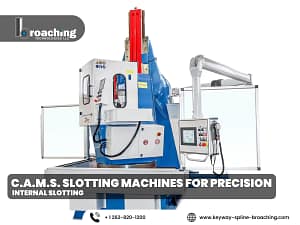
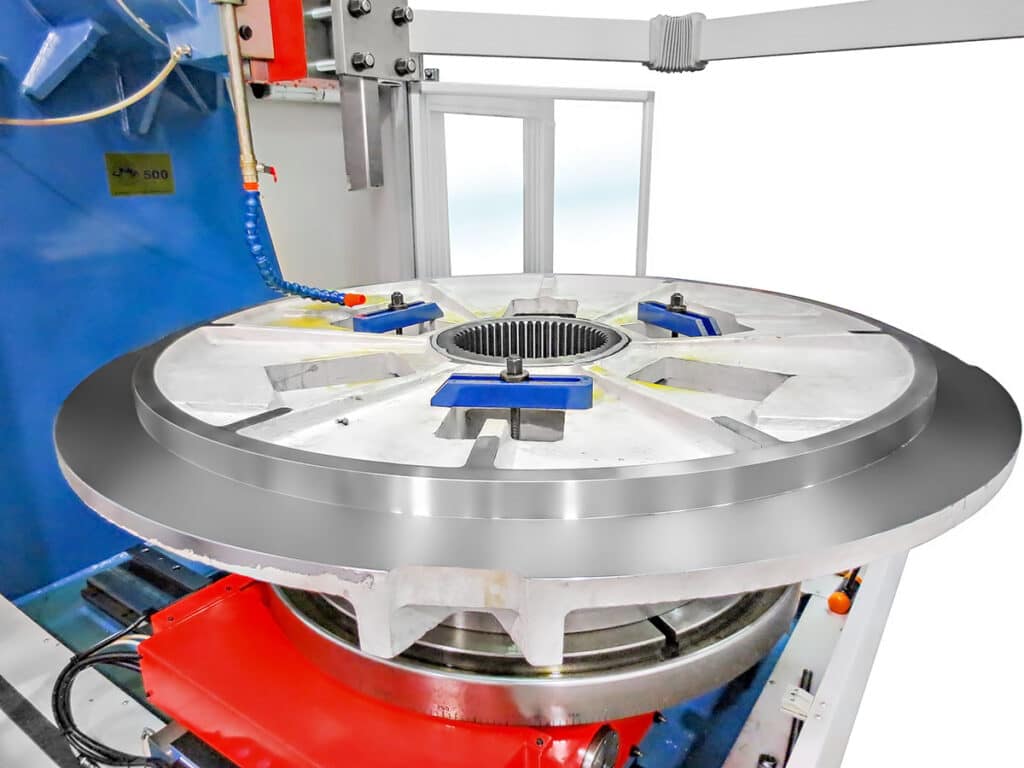
Stainless rewards stability. The vertical slotting machines we run deliver controlled stroke depth and the stiffness needed to hold machining accuracy and repeatability in tough alloys, with minimal chatter.
Chip Control
Stainless chips run long and stringy. Correct broach geometry and well-sized gullets keep them moving instead of packing, which is what keeps a single-stroke cut clean from first tooth to last.
Troubleshooting Stainless Broaching: Symptoms and Fixes
When a stainless cut starts going wrong, the cause is usually one of a handful of culprits. This table maps the symptom to the fix.
| Symptom | Likely Cause | Practical Fix |
|---|---|---|
| Rapid tool wear or glazing | Tooth rubbing on a work-hardened surface | Resharpen, increase rise per tooth, reduce cutting speed |
| Torn or poor surface finish | Built-up edge, too little coolant | Sharp coated tooling, more lubricity at the cut |
| Chips packing in the gullets | Stringy chips, undersized gullets | Improve coolant flow, correct broach geometry |
| Oversized or inconsistent slot | Deflection, weak fixturing | Add rigidity, verify setup and alignment |
| Galling or smearing | Heat and adhesion at the edge | Better coolant, coated tooling, lower cutting forces |
Beyond Keyways: What We Cut in Stainless
While broaching stainless steel is the most common request, the same expertise applies across internal features. We cut blind and through keyways, internal splines, and custom internal profiles in stainless to tight tolerances from internal keyway machining on a single prototype to precision stainless steel broaching across a production run. The cold-cut advantage and grade-specific tooling carry through every one of them.
When to Keep Stainless Steel Broaching In-House—and When to Outsource
For low-volume, specialized, or one-off stainless work, outsourcing to a contract broaching shop almost always makes sense the tooling expertise and dedicated equipment are hard to justify for occasional parts. When stainless broaching becomes recurring, high-volume production, bringing the capability in-house can lower cycle time and tighten control. Broaching Technologies supports both paths: we run contract broaching for customers who’d rather hand off the hard alloys, and as the exclusive North American dealer for C.A.M.S. vertical slotting machines, we can equip shops ready to own the process themselves.
Stainless Steel Broaching in Menomonee Falls, WI
Whether your part is 304, 316, 17-4 PH, or a hardened martensitic grade, Broaching Technologies brings decades of hands-on experience and in-house tooling capability to broaching stainless steel parts the right way clean geometry, protected corrosion resistance, and repeatable results.
Contact Us
If you’re broaching stainless steel — keyways, splines, or custom internal profiles in any grade Broaching Technologies is built for the work. We combine tight-tolerance machining with the metallurgical know-how to protect what makes stainless valuable in the first place, backed by C.A.M.S. vertical slotting technology and a team that cuts these alloys week in and week out.
Broaching Technologies, LLC W166N5925 Greenway Circle, Menomonee Falls, Wisconsin 53051 Phone: (262) 820-1200 | Fax: (262) 293-3705 Email: sales@broachingtech.com
Send us your grade and part geometry, and we’ll recommend the right stainless steel broaching solution whether that’s running the job for you or equipping you to run it yourself.
Frequently Asked Questions
Does broaching reduce stainless steel’s corrosion resistance?
No. Broaching is a cold process with no heat-affected zone, so it preserves corrosion resistance. The main risk is free-iron contamination from improper tooling, which is why clean handling and post-machining passivation matter.
Can you hold tight tolerances in 304 and 316 stainless?
Yes. With sharp grade-appropriate tooling, the correct feed, and rigid fixturing, we routinely achieve tight tolerances and dependable dimensional accuracy in austenitic stainless.
How is broaching stainless different from broaching carbon steel?
Stainless work-hardens faster, holds more heat at the edge, and produces stickier chips. That means sharper tooling, careful chip load, generous coolant, and generally slower cutting than equivalent carbon-steel work.
Do you broach heat-treated or hardened stainless?
Yes. Hardened and heat-treated grades are broachable using carbide tooling, conservative parameters, and rigid setups, though they’re more demanding than annealed material.
How long does a broach last when cutting stainless?
It depends on the grade, hardness, tooling, and coolant. Stainless is harder on tooling than carbon steel, but proper rise per tooth, coatings, and maintenance significantly extend usable life between resharpening.
What do you need to quote a stainless broaching job?
The grade and heat-treat condition, a part drawing or feature dimensions, the internal feature required, tolerance, and quantity. With those, we can recommend tooling and the most efficient approach.