Blind vs Through Keyway Broaching: Which Internal Cut Does Your Part Need?
A single keyway can decide whether a shaft-and-hub assembly runs true for years or shears under load. Long before that key ever seats, though, a more basic question has to be settled on the print: should the keyway run the full length of the bore, or stop short of the far face? That decision blind vs through keyway broaching drives your tooling, your cost, your lead time, and the strength of the finished connection. Getting it right starts with understanding how each cut is actually made.
At Broaching Technologies in Menomonee Falls, WI, we cut both blind and through keyways every day, that reflects what the difference means in real production, not just in theory.
What Keyway Broaching Actually Does
Keyway broaching (also called keyseating) is a machining process that pulls or pushes a toothed broach tool through an internal bore to cut a precise rectangular slot. That slot accepts a key, locking a shaft to a hub, gear, pulley, sprocket, or coupling so the assembly can transmit torque without slipping. Because each tooth on the broach removes a little more material than the one before it, a single controlled stroke produces a finished keyway with a clean surface finish and a tight, repeatable tolerance — no secondary cutting required.
Blind vs Through Keyway Broaching are classified based on the tool’s cutting path—either ending within the material or extending all the way through it.
Through Keyway Broaching Explained
In a through keyway, the slot runs the entire length of the bore. The broach enters one face of the workpiece and exits the opposite face, carrying its chips out with it. Because the tool clears the part on every stroke, chip evacuation takes care of itself, the cutting load stays predictable, and the operation runs fast.
Through keyways are the default for open, two-sided bores — the kind found in most standard hubs, sprockets, and pulleys. They are typically the more economical option, since standard tooling and a straightforward setup do the job. If your part has clearance on both ends of the bore, a through keyway is usually the practical and cost-effective choice.
Blind Keyway Broaching Explained
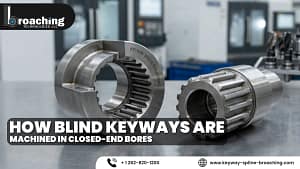
A blind keyway stops short of the far face, leaving solid material at the bottom of the bore. Here the broach cannot exit the part, which changes everything about the process. Chips have nowhere to fall, so chip packing becomes a real risk; cutting depth has to be controlled precisely so the slot ends exactly where the design calls for it; and the tooling needs special geometry to relieve chips and manage load on a closed cut.
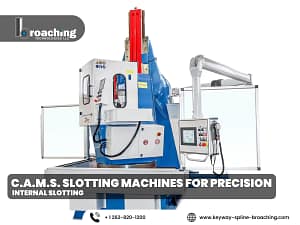
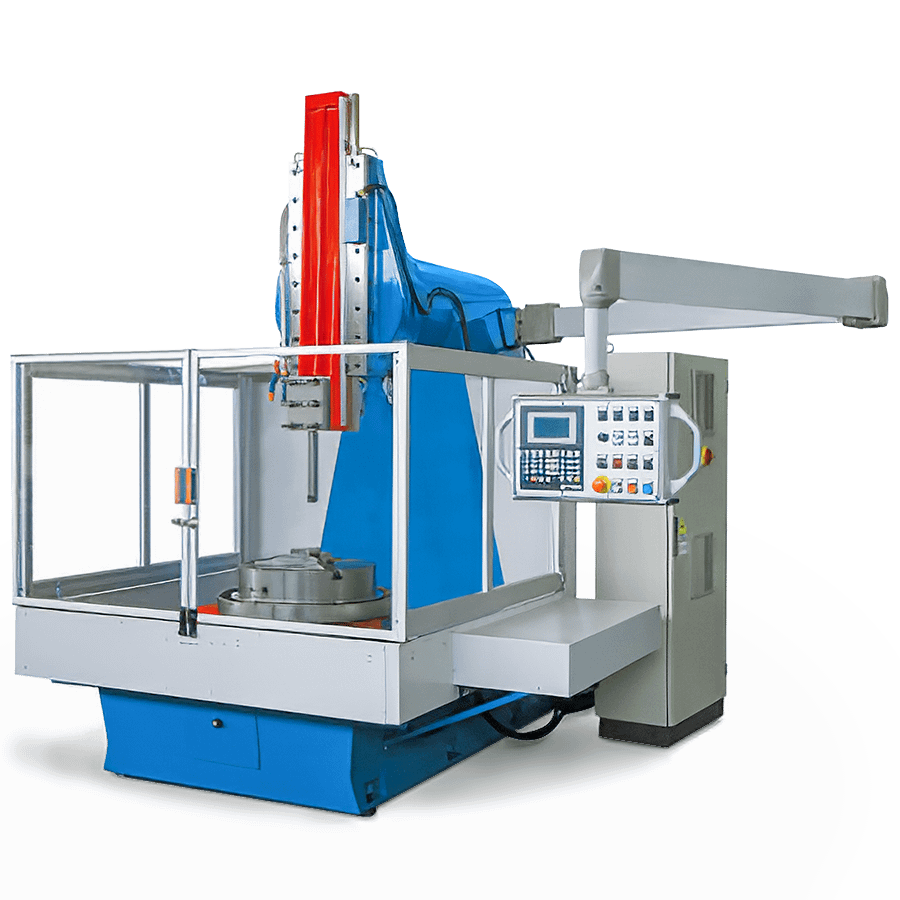
This is why blind keyway broaching is best handled on vertical slotting machines and keyseaters rather than traditional horizontal broaching systems. The vertical architecture gives controlled tool engagement, accurate depth stops, and the rigidity needed to hold tolerance when the broach can’t run clear. Blind cuts are common when a part must keep its external geometry, when the bore is closed or stepped, or when a sealing or structural surface at the end of the bore has to stay intact. They cost more and run slower than through keyways — but for the right part, they’re the only correct answer.
Blind vs Through Keyway Broaching: Side-by-Side Comparison
| Factor | Through Keyway Broaching | Blind Keyway Broaching |
|---|---|---|
| Tool path | Broach exits the opposite face | Broach stops inside the part |
| Chip evacuation | Self-clearing, chips exit with the tool | Restricted — requires chip relief and staged cutting |
| Depth control | Length-based, straightforward | Critical — precise stroke and depth stops needed |
| Typical equipment | Standard horizontal or vertical broaching | Vertical slotting machines / keyseaters |
| Tooling | Often standard broach geometry | Custom geometry, progressive tooth loading |
| Relative speed | Faster | Slower |
| Relative cost | Lower | Higher |
| Best-fit parts | Open, two-sided bores | Closed, stepped, or sealed bores |
How to Decide Which Cut Your Part Needs
The geometry of the part almost always makes the decision for you. A quick way to think it through:
- Choose a through keyway when the bore is open on both ends and nothing in the design requires the slot to stop short. It is faster, more economical, and ideal for standard production runs.
- Choose a blind keyway when the far end of the bore is closed, when a shoulder or sealing face must be preserved, or when the print specifically calls for the keyway to terminate before the part face — common in hubs, couplings, and closed-end housings.
If you’re unsure, the smartest move is to send the part drawing to an experienced broaching shop before finalizing the design. Small changes to bore depth or end clearance can shift a difficult, expensive blind cut into a simple through cut — or confirm that a blind keyway is genuinely required.
Why Blind Keyways Are Harder — and Why Experience Matters
Blind broaching success depends as much on tooling and machine rigidity as on the operator. Managing chip evacuation in a closed cut, holding concentricity and depth, and protecting surface finish all demand broach tools engineered specifically for blind work. The same challenge applies to blind splines, where tooth form and depth control have to stay accurate even though the tool never exits the part.
We design, maintain, and recondition custom broach tooling in-house, and we run the same C.A.M.S. vertical slotting machines we supply across North America. That hands-on experience with chip relief geometry, progressive tooth loading, and tight depth tolerances is what lets us deliver clean, repeatable blind keyways and splines in materials ranging from carbon and alloy steels to stainless, aluminum, bronze, and high-strength alloys like Inconel.
Precision Keyway Broaching in Menomonee Falls, WI
Whether your part calls for a straightforward through keyway or a demanding blind feature, Broaching Technologies brings decades of contract broaching expertise to the job. Our machinists and engineers handle keyway broaching, spline broaching, blind hole broaching, internal shape cutting, and custom short-run work for industries including oil and gas, power transmission, aerospace and defense, agriculture, and medical device manufacturing. Send us your drawing and we’ll recommend the most efficient, cost-effective path to the finished part.
Contact Us
If your project involves a Blind vs Through Keyway Broaching — or a spline, internal shape, or custom broaching job — Broaching Technologies is ready to help. As the exclusive North American dealer for C.A.M.S. vertical slotting machines and a trusted contract broaching shop, we deliver precision internal cuts with the tooling expertise to back them up.
Broaching Technologies, LLC W166N5925 Greenway Circle, Menomonee Falls, Wisconsin 53051 Phone: (262) 820-1200 | Fax: (262) 293-3705 Email: sales@broachingtech.com
Request a quote today and let our team recommend the right broaching solution for your part.
Frequently Asked Questions
What is the difference between a Blind vs Through Keyway Broaching? A through keyway runs the full length of the bore so the broach exits the part, while a blind keyway stops short of the far face, keeping the broach inside the workpiece. The blind version requires tighter depth control and specialized tooling.
Is blind keyway broaching more expensive than through broaching? Generally, yes. Blind keyways are slower to cut, demand custom tooling, and require controlled chip evacuation, which raises both setup and run cost compared with a standard through keyway.
Can blind keyways and splines be cut to tight tolerances? Yes. Using rigid vertical slotting machines with accurate depth stops and purpose-built broach geometry, blind keyways and blind splines can be held to tight, repeatable tolerances with a clean surface finish.
Which machines are used for blind keyway broaching? Blind keyways are typically cut on vertical slotting machines or keyseaters, which provide controlled stroke depth and the rigidity that closed-end cuts require — something traditional horizontal broaching is poorly suited to.
What materials can you broach? We routinely broach carbon and alloy steels, stainless steels, aluminum alloys, bronze and brass, and high-strength alloys such as Inconel, including challenging blind features in difficult materials.
Do I need to decide on blind vs. through before sending my part? Not necessarily. Send us the drawing and our team will review the geometry, confirm whether a blind or through keyway is required, and recommend the most economical approach.